Members Of Kutumba
The word ‘Kutumba’ holds a special meaning in the Nepali language. It stands for a unique bond amongst community members. As their name, Kutumba is all about bringing together traditional folk tunes and instruments with new and improvised sounds and ideas.
Kutumba is a folk instrumental ensemble, group of six professionals from Kathmandu. Having come together for the preservation of their culture and art, Kutumba wishes to spread love and joy of Nepali folk music throughout the world. Self motivated and self driven, Kutumba is a group with their own unique sound and vision.The seven members have different roots and backgrounds in music. Kutumba is the harmony of traditional roots, culture and new sounds.

 Living Colour is an American rock band from New York City, formed in 1984. Stylistically, the band's music is a creative fusion influenced by free jazz,funk,hard rock and heavy metal. Their lyrics range from the personal to the political, in some of the latter cases attacking Eurocentrism and racism in America.
 Living Colour rose to fame with their debut albumVivid in 1988. Although the band scored a number of hits, they are best remembered for their signature song "Cult of Personality", which won a Grammy Award for Best Hard Rock Performance in 1989. They were also named Best New Artist at the 1989 MTV Video Music Awards. After disbanding in 1995, Living Colour reunited in late 2000.
 To give more exposure to their work and try for a professional recording deal, a short live performance was recorded and sent to the Dutch label, Vic Records.HammerFall soon received a deal and spent the whole of the following year writing the album Glory to the Brave. The album was initially released in the Netherlands and obtained positive feedback; it is also worthy of notice that the band'smascot, the knight Hector, first appeared on the cover of this album.
 As HammerFall grew in popularity, the time available for members of the band to dedicate to other projects became limited. Jesper and Glenn were committed to In Flames and Fredrik was committed to the thrash metal band Beyond. Thus, the HammerFall's line-up soon underwent changes. Stefan Elmgren assumed the lead guitar and Patrik Räfling assumed the drums (they joined the band in the end of 1997 after the release of Glory to the Brave album) and Fredrik decided to remain in the band until a suitable replacement for him was found. This happened in May - 1998, when bassist magnus Rosen joined the band. Stefan Elmgren played some of the guitars on the Glory to the Brave album (like the acoustic guitars on "I Believe") but only as a guest performer, not a member of the band.
 Aerosmith is an American hard rock band, sometimes referred to as "The Bad Boys from Boston" and "America's Greatest Rock and Roll Band. Their style, which is rooted in blues-based hard rock, has come to also incorporate elements of pop, heavy metal, and rhythm and blues, and has inspired many subsequent rock artists. The band was formed in Boston, Massachusetts in 1970. Guitarist Joe Perry and bassist Tom Hamilton, originally in a band together called the Jam Band, met up with singer Steven Tyler, drummer Joey Kramer, and guitarist Ray Tabano, and formed Aerosmith. In 1971, Tabano was replaced by Brad Whitford, and the band began developing a following in Boston.
The band has sold more than 100 million albums worldwide, including over 46 million in the United States.[10] The band's 1987 major label debut album Appetite for Destruction has sold in excess of 28 million copies worldwide and reached number one on the United States Billboard 200. In addition, the album charted three Top 10 hits on the Billboard Hot 100, including "Sweet Child o' Mine" which reached number one. The 1991 albums Use Your Illusion I and Use Your Illusion II debuted on the two highest spots on the Billboard 200 and have sold a combined 14 million copies in the United States alone and 35 million worldwide. After over a decade of work, the band released their follow-up album, Chinese Democracy, in 2008.
Their mid-to-late eighties and early nineties years have been described by individuals in the music industry as the period in which "they brought forth a hedonistic rebelliousness and revived the punk attitude-driven hard rock scene, reminiscent of the early Rolling Stones." Background Information
The discography of American
Bon Jovi's first commercial release was the single "Runaway" in 1983. It was taken from their 1984 self-titled debut album Bon Jovi which made a small impact in the US. Their second album 7800° Fahrenheit achieved even less success than it's predecessor, except in Japan where it reached the top 5 on the album charts.
The band's first major success came with the release of their third studio album Slippery When Wet. Released in 1986, the album became Bon Jovi's best-selling album worldwide selling over 25 million copies.. It reached number one in Australia, Canada and US where it spent 94 weeks in the Billboard 200 album chart, reaching 12× platinum status. The first two singles from the album, "You Give Love a Bad Name" and "Livin' on a Prayer", both reached number one on the Billboard Hot 100 singles chart. The follow up album to Slippery When Wet was New Jersey which shared similar global success. The album produced five top 10 hits on the Billboard Hot 100 giving Bon Jovi the record for the most top 10 singles spawned by a rock album. Two of the hits, "Bad Medicine" and "I'll Be There for You", managed to reach number one.
Bon Jovi's fifth studio album Keep the Faith released in 1992 marked a change in the band's sound. The album proved to be a success, especially in Europe and Australia where it reached number one. It produced the top 10 hit "Bed of Roses" while the title track hit number one on the Mainstream Rock Tracks. In 1994, Bon Jovi released a 'greatest hits' album titled Cross Road, with two new tracks. The first single off the compilation, "Always", spent six months on the top 10 of the Billboard Hot 100, certified platinum in the United States and became Bon Jovi's highest selling single. The compilation album would be the last release to feature bass player Alec John Such. Despite the departure of Such, the band released their sixth studio album, These Days, a year later in 1995. The album fared better internationally than in the United States, but still managed to reach Platinum status by the RIAA. Following the tour of the album, the members of the band went their separate ways.
Bon Jovi regrouped in 2000 and released their seventh studio album Crush. Despite a nearly 5 year hiatus, the album was just as successful as their previous releases. It became the band's fifth and fourth consecutive number one album in Australia and UK respectively and reached double platinum in the United States. The success of the album was largely due to the lead single "It's My Life" which was nominated for a Grammy Award for Best Rock Performance by a Duo or Group while the album itself was nominated for Best Rock Album.
The band soon returned with an eighth studio effort in 2002, Bounce. It debuted at number two on the Billboard 200, making it Bon Jovi's highest debut in the band's 20 year history. This record was beaten however with the band's ninth studio album Have a Nice Day in 2005. The title track was an international hit reaching the top 10 in Australia, Europe and UK. Another track, "Who Says You Can't Go Home", reached number one on the US Billboard Hot Country Songs after being remixed into a country duet with Jennifer Nettles. The duet earned Bon Jovi a Grammy Award for Best Country Collaboration with Vocals. The single gaveway to the band's tenth studio album in 2007, Lost Highway, which was a Nashville-influenced record. The album became the first Bon Jovi album to debut at number one in the United States, making it the band's first number one album in their home-country since the late eighties. Although the album achieved great success, winning them a Grammy nomination for best Pop Vocal Album, the band returned to their rock roots in 2009 with their eleventh studio album The Circle. The album also debuted at number one on the Billboard Hot 100, making it the band's fourth number one album in the United States. The lead singles from both Lost Highway and The Circle received Grammy Award nominations for Pop Performance by a Duo or Group with Vocal. The lead singles were "(You Want to) Make a Memory" and "We Weren't Born to Follow", respectively.

 Background Information
Behemoth is a Polish blackened death metal band from Gdansk, formed in 1991. They are considered to have played an important role in establishing the Polish extreme metal underground, alongside bands such asVader, Decapitated,Vesania and Hate.
Until the late 1990s, the band played a traditional black metal style with heathen lyrical content, but soon changed to that of occult and thelemic themes written by their lead vocalist Nergal and Krzysztof Azarewicz. With the 1999 release of Satanica, the band showed their presence in the blackened death metal scene, while retaining their own signature style characterized by the drum work of Inferno, multi-layered vocals andNile-styleMiddle-Eastern influences. Even though Behemoth has been labeled as death metal, black metal or thrash influenced, Nergal has mentioned that he doesn't like the band to be labeled.
 10.Mastodon, Leviathan (2004):-In an age where metal has become ludicrously heavy and challenging (and Mastodon is right up there with the best of them), Leviathan presented a bold and colorful image that was also literary and had nothing to do with tired metal clichés. This was nice art, and smart art, and, as a bonus, the lush, fresh beauty of the cover concept continued right on through the booklet.
| Song Similarities | ||
|---|---|---|
| Megadeth Song: | Metallica Song: | Similarity: |
| Looking Down the Cross | Ride the Lighting | Riff |
| Mechanix | The Four Horsemen | Whole song |
| In My Darkest Hour | For Whom the Bell Tolls | Opening riff |
| Hangar 18 | The Call of Ktulu | Riff |
| Dawn Patrol | The God That Failed | Riff |
| This Was My Life | Phantom Lord | Bass riff |
| She-wolf | Disposable Heroes | Opening riff |
| FFF | Motorbreath | Riff |
| When | The Call of Ktulu | Opening riff |
| Go to Hell | Enter Sandman | Riff and lyrics |
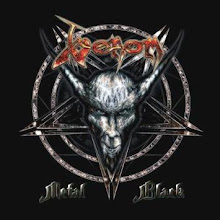
 The first wave of black metal emerged in Europe in the early and mid-1980s, led by Britain's Venom, Denmark's Mercyful Fate, Switzerland's Hellhammer and Celtic Frost, and Sweden's Bathory. By the late 1980s, Norwegian bands such as Mayhem and Burzum were heading a second wave. Black metal varies considerably in style and production quality, although most bands emphasize shrieked and growled vocals, highly distorted guitars frequently played with rapid tremolo picking, a "dark" atmosphere and intentionally lo-fi production, with ambient noise and background hiss. Satanic themes are common in black metal, though many bands take inspiration from ancient paganism, promoting a return to pre-Christian values. Numerous black metal bands also "experiment with sounds from all possible forms of metal, folk, classical music, electronica and avant-garde." Darkthrone drummer Fenriz explains, "It had something to do with production, lyrics, the way they dressed and a commitment to making ugly, raw, grim stuff. There wasn't a generic sound."
 By 1990, Mayhem was regularly wearing corpsepaint; many other black metal acts also adopted the look. Bathory inspired the Viking metal and folk metal movements and Immortal brought blast beats to the fore. Some bands in the Scandinavian black metal scene became associated with considerable violence in the early 1990s, with Mayhem and Burzum linked to church burnings. Growing commercial hype around death metal generated a backlash; beginning in Norway, much of the Scandinavian metal underground shifted to support a black metal scene that resisted being co-opted by the commercial metal industry. According to former Gorgoroth vocalist Gaahl, "Black Metal was never meant to reach an audience.... [We] had a common enemy which was, of course, Christianity, socialism and everything that democracy stands for."
By 1992, black metal scenes had begun to emerge in areas outside Scandinavia, including Germany, France, and Poland. The 1993 murder of Mayhem's Euronymous by Burzum's Varg Vikernes provoked intensive media coverage. Around 1996, when many in the scene felt the genre was stagnating, several key bands, including Burzum and Finland's Beherit, moved toward an ambient style, while symphonic black metal was explored by Sweden's Tiamat and Switzerland's Samael. In the late 1990s and early 2000s, Norway's Dimmu Borgir brought black metal closer to the mainstream, as did Cradle of Filth, which Metal Hammer calls England's most successful metal band since Iron Maiden.
 Heavy metal (often referred to simply as metal) is a genre of rock music that developed in the late 1960s and early 1970s, largely in the United Kingdom and the United States. With roots in blues-rock and psychedelic rock, the bands that created heavy metal developed a thick, massive sound, characterized by highly amplified distortion, extended guitar solos, emphatic beats, and overall loudness. Heavy metal lyrics and performance styles are generally associated with masculinity and machismo.
 The first heavy metal bands such as Led Zeppelin, Black Sabbath and Deep Purple attracted large audiences, though they were often critically reviled, a status common throughout the history of the genre. In the mid-1970s Judas Priest helped spur the genre's evolution by discarding much of its blues influence; Motörhead introduced a punk rock sensibility and an increasing emphasis on speed. Bands in the New Wave of British Heavy Metal such as Iron Maiden followed in a similar vein. Before the end of the decade, heavy metal had attracted a worldwide following of fans known as "metalheads" or "headbangers".
In the 1980s, glam metal became a major commercial force with groups like Mötley Crüe. Underground scenes produced an array of more extreme, aggressive styles: thrash metal broke into the mainstream with bands such as Metallica, while other styles like death metal and black metal remain subcultural phenomena. Since the mid-1990s, popular styles such as nu metal, which often incorporates elements of funk and hip hop; and metalcore, which blends extreme metal with hardcore punk, have further expanded the definition of the genre.
 1. Black Sabbath
 2. Iron Maiden
 3. Metallica
 4. Exodus
| 5.Lacuna Coil A killer Italian goth metal band. What Evanescence would sound like if they were good. |
 6.Type O Negative
 7. Fear Factory
 8. Cannibal Corpse
 9. Altar
 10. Napalm Death
 11. Opera IX
 12. Cradle of Filth
 13. Emperor
 14. Aborym
 15. Satyricon
 16. Deströyer 666
 18. Burzum
 19. Darkthrone
 20. Kampfar
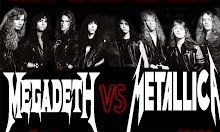
Dave and James, 1982 - friends
"Dave was all speed. He had no feeling, he had no pull-offs, he had no brilliant things. He tried to get brilliant sometimes, but it would sound awful." (Hetfield, 1983)

Dave Mustaine and James Hetfield, 1996 - enemies
How things have changed.
"I still love James very much. I respect his ability as a player and I miss him. But there was a reason why it ended. A lot of it had to do with drugs and alcohol on my part. He never did drugs. A lot of it had to do with the fact I was a violent asshole. He wasn't. He was a very gentle person when we were together although he enjoyed listening to very violent music. We would drive 60 miles an hour up and down the Pacific Coast Highway in the fog, drunk and listening to Venom." (Mustaine, 1998)
"James and I have always been the main thing in this band, and we always looked at Dave and Ron [McGovney] and thought, 'This is fine for now, but... ' We had a vision and these guys weren't gonna last. We weren't gonna kick them out, but if we happened to find someone who could fit in, we get'em in the band." (Ulrich, 1983)
In the Beginning
 "I was convinced that I should be in the band and went to rehearsal. I was tuning up when all the other guys in the band went into another room. They weren't talking to me, so I went in and said, 'What the fuck? Am I in the band or not?' and they said, 'You've got the gig.' I couldn't believe how easy it had been and suggested that we get some beer to celebrate." (Mustaine)
"In the beginning, I was the guitar player in Metallica, Hetfield was the mastermind behind the lyrics and Lars was back there banging on his drum set. We gave this style of music a format and a direction - I'll always be proud of that. It was like the town wasn't big enough for the three of us [Mustaine, Hetfield, Ulrich]. There was just too much personality. It was like having three Dr. Frankensteins in one band. Anyway, it all came to a head one day when James kicked a dog of mine. We were all really plowed at the time - we always were. Anyway, one thing led to another and I hit James in the face. He told me to get my shit and get out. I told him that he couldn't fire me because I had already quit. In retrospect, James and Lars were really focused in their own way, and I wasn't. I begged to differ with almost everything just for the sake of being argumentative. But that's me. I'm a sarcastic fucker." (Mustaine, 1990)
"He had no idea about what our music's about, but he was very enthusiastic. It took him a rather short time to get to understand us, and that was even more cool since everybody else in LA at that time were nuts about doing a career, and imitating bands like Quiet Riot, Ratt and Motley Crue." (Ulrich)
Two Great Bands
 "I miss them a lot. I comes and goes, and sometimes it's painful and sometimes it's very vindicating. I know there are two great bands now, but it makes me wonder if I was still in the band how much farther they would or would not have gone." (Mustaine)
 "I think, though, aside from us [Megadeth], that Metallica are probably the best band at what they do. In the Eighties, we wrote a certain chapter - thrash/speed metal - but in the Nineties, it's the New Age of Heavy Metal. It's come full circle. It says in the Bible that a dog returns to its own vomit. Well, we're back to basic barf!" (Mustaine)
"Too much has been made of that shit. I told the truth - about how James ripped me off - but people didn't want to hear it. So I've learned to just forget it and move ahead. My attitude today is that two good bands emerged from that mess. Metallica are cool, but so are Megadeth. I think we can blow anyone away. We have a real commitment to our music, and that scares some people." (Mustaine)
"I really don't want to start anything with them, I don't think there's any way to win that one for me. If I say nice things about them, I'm Iying. If I say bad things, it looks like l'm trying to generate some sort of publicity. So what I've done is try to avoid the subject as much as possible - which isn't easy. When I'm asked about their album, I tell everyone that I really like it, that it's a great album. But if they ask me about them personally, that's another matter. They're dicks who really don't know as much as they think they do. You've got to remember, they gave it to me pretty bad when I left the group. It's one thing to part ways and just bury the hatchet, but they were trying to bury it in my head. I know how they felt about me and tell anyone who'll listen that I was a drunk who was holding the band back - that was a load of shit. Things weren't going fast enough for them, so they blamed me. The good part is that now I have the chance to make them eat their words. I feel sorry for them because of what they've had to go through recently, but that really doesn't change my feelings." (Mustaine, 1987)
"A lot of that was just me getting frustrated and putting it all out at the one time. It was blown way out of proportion. At interviews, the guy would ask a question that he knew would get an answer that would make it look like I was angry with Metallica and I hated that. A lot of it was one magazine that wouldn't give up the issue until I went out of my way to resolve the situation. Now Lars Ulrich and I are good friends and we drink together. It's great that we can be friends now because when I was in Metallica, we argued a lot and that led to me drinking excessively which made the situation worse. That's in the past now and I want to look towards good things in the future." (Mustaine)
"Lars and I talk, Kirk and I have spoken, Jason and I used to be really, really close, but I haven't talked to him much lately, and James knows how I feel about him. I respect him a lot as a singer/songwriter, and I wish them all continued success - not for much longer though. God, please, go away you guys!" (Mustaine)
 "I figure that Metallica are such an integral part of me - what they do, how they think - because of how we all started, these three minds. Maybe I'm flattering myself by drawing the comparison, but I think there are a lot of similarities that people deny. The mannerisms that James and I have on-stage, some are identical. A lot of the things Lars says are things I used to say. In those days I used to handle all the interviews. When I watch them, it's like I see a part of me, and I'm so happy for them... I talk to Lars all the time. For whatever reason, James and I haven't really sat down and ironed out the past. I was so hurt by getting fired with no warning that I had a lot of resentment. I was very jealous as I watched my baby go away from me. I watched their success for so long, and for the longest time I was so bitter. But then I realized that I still get royalties from the songs I wrote, and people still
 "I still make a lot of money off that band. And here's the catch: I owe a lot of my success to Metallica. A lot of people got to know who this ex-guitarist of Metallica is and they've opened so many doors for me and the other bands that are like-minded. I don't want to discredit my ability, I know the majority of our success is based solely on my songwriting, my hard work and the people I've chosen and their contributions. It doesn't bother me anymore. But for a long time it did. Like I said, not having closure made me wonder why [I was fired from Metallica] for a long time. But when I got over the whys and figured out what led to it, I understood and agreed that they did the right thing." (Mustaine, 1998)
"I keep comparing Megadeth to Metallica. I realized that often people hate the things, which they really love. I loved to play with Metallica. When they kicked me out I lost something which I loved and I started to hate them. Now every morning I fall to my knees and thank God for being able to finally see this truth." (Mustaine)
"Lars [Ulrich] himself has baited me by saying he wishes I would be more experimental. Now, does he want me experimental as in kissing and frenching my lead guitar player or my drummer? Is he talking about painting my nails, wearing makeup and cutting off all my hair? I don't know, and if he'd like to see me get more experimental, I welcome his ideas. Maybe the two of us should play together again." (Mustaine, 1998)
Metallica and Megadeth played a few concerts together in Europe in 1993, including the famous Milton Keynes Bowl in June with Diamond Head, where Dave proclaimed:
"The ten years of bullshit is over between Metallica and Megadeth!"
"I would love to play together with James and Lars again, and have said so in interviews. Me and David Ellefson, James and Lars, doing half mega/half meta, James singing my songs and me singing his. That would be a riot. It could suck, it could be great, but I know that it would be fun for us all to get back to the day when metal was a 'way of life' and people looked to us all as their leaders." (Mustaine, 2001)
"I did see Lars say something in our 'VH1 Behind the Music' that they would like to do something together again. I guess I am just dreaming of better days when we were all metal. I am going back, they may too, I hope. But, doing this would blow everyone away." (Mustaine, 2001)
Jason Newsted talks about Megadeth
On the break-up of Megadeth and Dave Mustaine's injury that was cited as the official reason for the split:
"That's sad, man, really sad. Because it was forced... it's just really, really sad for someone who was such a prolific writer. He [Mustaine] really came up with some great stuff, you know. The actual fluidity and ability that he had on the guitar, just out-and-out speed, was pretty amazing. My old band Flotsam and Jetsam opened a lot of shows for Megadeth back in the day, and we spent a lot of time together, so I'm just sorry to hear about the whole thing." (Newsted, 2002)
On referring to Megadeth as a "watered-down Metallica" in a other interview:
"I think I was talking about Echobrain [Jason's band] and people being surprised by the sound of the band, that they wanted something heavier but still liked it. The most common response was, 'Wow, we wanted something heavier, but we still like it.' So I was saying that it would have been so stupid to do something predictable like a watered-down or wannabe Metallica, or rap-rock record, or something like that. And in that context, I said something to the effect that Megadeth was always just behind Metallica and always wanted to be Metallica. So I won't back off that. I think it's an absolutely true statement. But it's not a disrespectful statement. Mustaine was, and maybe still is, quite bitter about that, and he always wanted to achieve what Metallica achieved. They wrote great songs, made great records, but were never quite able to get to that pinnacle." (Newsted, 2002)
On the rumors about ex-Megadeth bassist Dave Ellefson replacing him in Metallica:
"That would be pretty weird. It would be a good fit but only musician-wise. Dave is one of the best bass players that has ever been in metal, no two ways about it. I still look up to him. And he's a good guy, which is why I wouldn't wish it upon him. He could definitely handle the gig as far as the playing and the interviews and all that, but dealing with the inner workings, I don't know." (Newsted, 2002)